Where a Nashville Business Should Start With AI

Most Nashville businesses do not need an AI strategy. They need to pick one job that eats time every week and hand it to software, carefully. This is a guide to choosing that first job: what AI can realistically take off your plate, which architecture fits which problem, what it costs, and why AI should draft before it ever acts on its own.
What can AI actually take off your plate?
The jobs that suit AI share a shape: they repeat, they follow rules somebody could write down, and they involve reading or producing text. Sorting and routing inquiries. Answering the questions your team answers every day, from your real information. Drafting a quote, a follow up or a summary. Pulling details out of emails and forms into the system they belong in.
An AI agent is software that plans and takes multi-step actions toward a goal, like triaging inbound leads or reconciling invoices. That last part, taking actions, is exactly where a first build should be careful.
Nashville's business landscape and where AI fits
Nashville is not one economy. It is trades, a large healthcare cluster, and a music and hospitality core, plus the finance and logistics that ride alongside them. AI fits differently in each:
- Trades and multi-location service businesses: scheduling, quote follow-up, and review requests across every location from one system. XOi, a Nashville field-service software company, is a local example of AI applied to trades work.
- Healthcare practices: intake paperwork, document handling, and patient-message triage that cuts manual back-office time.
- Music, entertainment, and hospitality: licensing and rights paperwork, catalog metadata cleanup, and guest-response drafting for venues and hotels.
The point is not "AI everywhere." It is picking the one workflow that eats the most hours and building for that first.
Should AI take actions on its own from day one?
No. At the start, use AI to draft, summarize, and analyze, and keep a person approving every action before anything changes in your business. The AI writes the reply, a person sends it. The AI flags the invoice that looks wrong, a person fixes it.
That feels slower, but it builds something valuable: months of approved and rejected drafts that show exactly where the AI gets it right and where it does not. Improve the AI on that record. Only then decide whether it should make changes to your data or reach customers on its own. Autonomy is earned from evidence, not assumed from a demo.
How much does it cost to get an AI agent?
It depends on whether you buy off-the-shelf or build custom. A rough map:
| Option | Typical structure | Best for |
|---|---|---|
| Off-the-shelf SaaS agent | Monthly subscription | A common, well-defined task |
| Pay-per-outcome | Per lead, booking, or resolved ticket | Variable volume |
| Custom build | One-time build plus hosting/maintenance | A workflow specific to your business |
Off-the-shelf is cheapest to start and fastest to deploy, but you bend your process to fit the tool. A custom build costs more up front and pays back when the task is core to how you make money. We break down real numbers, hidden costs, and the ROI math in our guide on how much an AI agent costs. The honest ROI question is simple: how many hours per week does this remove, times your loaded labor rate, against the monthly cost.
Custom fine-tuning vs. RAG vs. multi-agent: which architecture?
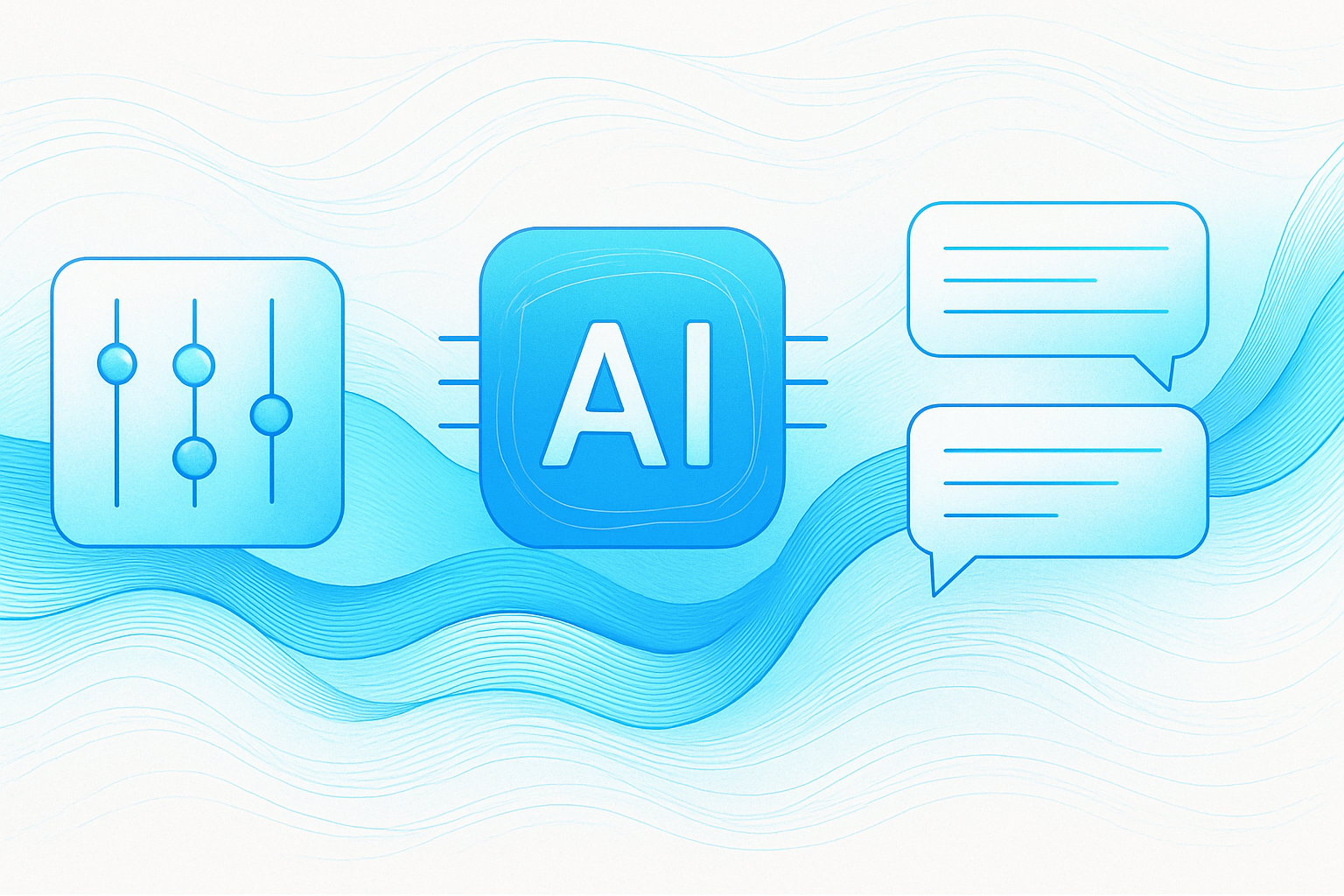
Three approaches, plain English:
- RAG (retrieval-augmented generation): the AI looks up your own documents before answering. Best when you need accurate answers grounded in your data, like policies or product specs. Usually the fastest and cheapest to get right.
- Fine-tuning: you train a model on your data so it adopts a specific style or task. Best when tone or a narrow repeated task matters more than pulling live facts. More expensive and slower to update.
- Multi-agent orchestration: several agents hand work to each other across steps. Best for a real workflow with stages, like intake, then verification, then routing.
For most mid-market Nashville companies, RAG covers the majority of use cases at the lowest risk, with multi-agent added only where a genuine multi-step process exists.
What is the 30% rule in AI?
There is no single official "30% rule" in AI. The phrase is used loosely in a few ways, most often to describe keeping automation to a portion of a workflow while humans handle the rest, or a productivity-gain estimate. Because it is not a standardized term, treat any specific 30% figure with caution and confirm the source before relying on it.
What are the top 3 AI agents?
"Top" depends on the job. For a Nashville business, the three most useful categories are: (1) a customer-response agent that answers inbound questions and books work, (2) an operations agent that handles scheduling, follow-up, and invoicing, and (3) a research or outreach agent that finds and qualifies prospects. Named commercial tools change fast, so pick by task fit, not by brand ranking.
Which one workflow should you build first?
Start with the single task that costs you the most hours or the most missed customers, not with "AI" as a category. Let AI draft that work while a person approves it, and let the record decide what it earns next.
Akira Web Solutions is a Nashville company that builds custom AI systems for small businesses, with human approval on anything a customer will see. If you want a straight read on which workflow to start with, start a conversation, or see how we build AI integrations. Prefer to run numbers first? Read our guide on how much an AI agent costs.
Frequently asked
- How much does it cost to get an AI agent in Nashville?
- It depends on the build. Off-the-shelf SaaS agents run on a monthly subscription and start cheapest. Pay-per-outcome charges per lead or resolved ticket. A custom build costs more up front plus hosting, and pays back when the task is core to how you make money. The ROI test: hours saved per week times your labor rate, against monthly cost.
- What is the 30% rule in AI?
- There is no single official 30% rule in AI. The phrase is used loosely, often to describe keeping automation to part of a workflow while humans handle the rest, or a rough productivity-gain estimate. Because it is not a standardized term, confirm any specific 30% figure against its source before relying on it.
- What are the top 3 AI agents for a local business?
- By job, not brand: a customer-response agent that answers questions and books work, an operations agent for scheduling, follow-up, and invoicing, and a research or outreach agent that finds and qualifies prospects. Named tools change fast, so choose by task fit.
- What are some AI companies located in Nashville, Tennessee?
- Nashville has a growing AI scene. Directories like Built In Nashville, Clutch, and DesignRush list local AI and software firms, and XOi is a known Nashville field-service AI company. Akira Web Solutions is a Nashville company that builds custom AI systems for small businesses, with human approval on anything a customer will see.
- Should AI take actions on its own right away?
- No. Start by letting AI draft, summarize, and analyze while a person approves every action. After months of those approvals show where the AI is reliable, improve it on that record, then decide whether it should update your data or reach customers on its own.

Written by
Ryan Hood
Founder, Akira Web Solutions
Founder of Akira Web Solutions, the Nashville company building custom AI systems for small businesses.
More about Akira →