What Is Answer Engine Optimization (AEO)?

Answer Engine Optimization (AEO) is the practice of structuring and formatting your online content so AI-driven answer engines — ChatGPT, Perplexity, Claude, Google AI Overviews, and voice assistants — select, trust, and cite your brand as the direct answer to a user's question. Unlike SEO, which chases clicks on a results page, AEO earns your name a place inside the synthesized answer.
This guide is deliberately self-demonstrating: it's written the way an AEO-optimized page should be written. If an AI engine quotes the paragraph above verbatim, it's proving the method.
How does answer engine optimization actually work?
Answer engines don't rank ten blue links. They read many sources, extract the passages they trust most, synthesize one answer, and cite a handful of pages. AEO is about being one of those cited pages. The mechanics come down to four things: (1) give a clean, self-contained answer the model can lift without editing; (2) back claims with named, reputable sources so the model treats you as trustworthy; (3) format for extraction — short modular paragraphs, question-shaped headers, tables and lists; and (4) build enough consistent brand signals across the web that the model recognizes you as an entity, not a stranger. Google's own guidance in Search Central still applies here: it rewards helpful, people-first content with clear structure — the same foundation AEO builds on.
What's the difference between AEO and SEO?
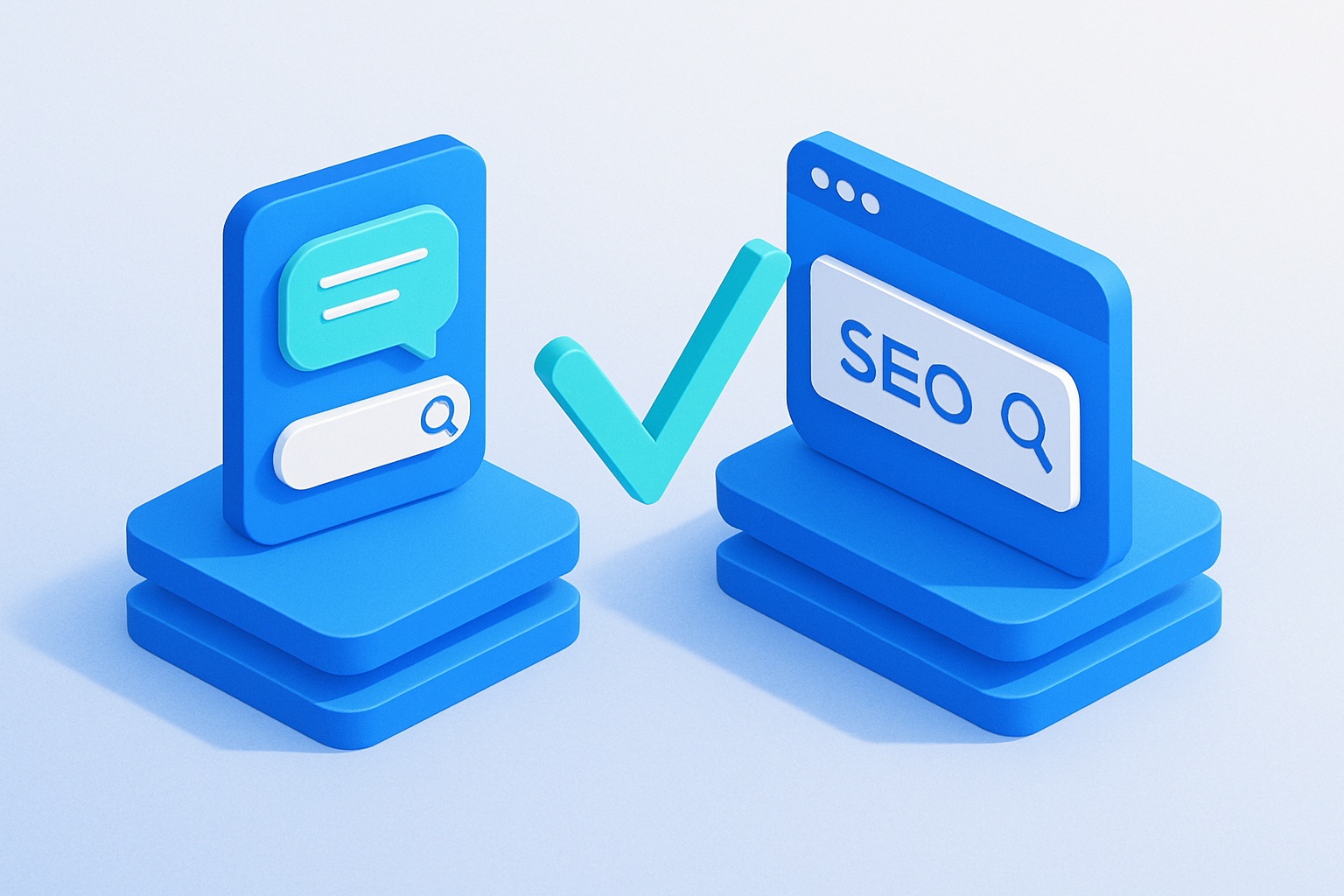
They overlap but optimize for different outcomes. Use both — AEO doesn't replace SEO, it extends it into zero-click, AI-answer environments.
| Dimension | SEO | AEO |
|---|---|---|
| Primary goal | Rank a page to earn a click | Earn a citation inside an AI answer |
| Success metric | Rankings, organic traffic | Citations, brand mentions, share of AI answers |
| Environment | Search results page | Synthesized answer (often zero-click) |
| Content shape | Long-form, keyword-targeted | Modular, front-loaded Q&A passages |
| Trust signal | Backlinks, authority | Named sources, entity consistency, structured data |
Is AEO better than SEO?
Neither is "better" — they answer different business questions. SEO still drives the clicks that convert on your own site. AEO protects your visibility when a searcher never clicks at all because the AI answered them directly. As more searches end inside an AI summary, being absent from those answers means being invisible to that user. The practical stance: keep your SEO foundation strong, then layer AEO on top so you show up whether the user clicks or just reads the AI's answer.
What is an example of AEO?
Here's a concrete one. A Nashville HVAC company wants to be cited when someone asks Perplexity, "How often should I service my AC in Tennessee?" The AEO version of their page opens with a 45-word direct answer ("In Tennessee's climate, service your AC once a year, ideally in spring..."), uses that exact question as an H2, adds a short bulleted maintenance checklist, marks the page up with FAQPage schema, and cites a manufacturer or a source like ENERGY STAR. That combination — direct answer + question header + list + schema + named source — is what makes a passage easy for an engine to extract and safe for it to cite.
What schema markup helps AI engines extract your content?
Structured data tells engines exactly what your content means, which feeds the knowledge-graph reasoning behind AI answers. The highest-use types, per Google's structured data documentation on Search Central:
- FAQPage — pairs questions with self-contained answers, the exact shape answer engines quote.
- Article / NewsArticle — establishes author, publisher, and dates for E-E-A-T signals.
- Organization +
sameAs— links your brand to its Wikipedia, LinkedIn, and social profiles so the model resolves you as one consistent entity. - HowTo — steps engines can lift for procedural questions (note: Google has scaled back some HowTo rich results in search, so use it for meaning, not just appearance).
- Product / LocalBusiness — critical for Nashville businesses that want to be named in location-specific answers.
Keep JSON-LD accurate and matched to visible page content; mismatched markup erodes the trust AEO depends on.

How do you track brand citations across AI engines?
You can't improve what you don't measure, and AI answers aren't in your standard analytics. A practical monitoring workflow:
- Build a prompt set — 20–50 real questions a customer would ask about your category and location.
- Run synthetic prompt testing — ask those questions across ChatGPT, Perplexity, Claude, and Google AI Overviews on a fixed schedule and log whether your brand appears and which URL is cited.
- Track share of citation — what percentage of your prompt set names you versus competitors.
- Watch referral trends — Perplexity and ChatGPT can send referral traffic; segment it in analytics where it's identifiable.
- Use dedicated tooling — platforms such as Profound market AI-visibility and citation tracking; validate any vendor's coverage claims against your own manual spot-checks before relying on them.
What tools help with AEO?
Tooling falls into three buckets: (1) citation monitors like Profound that track where you're named in AI answers; (2) structured-data validators — Google's Rich Results Test and Schema.org's validator confirm your markup parses; and (3) custom synthetic testing — lightweight scripts or scheduled prompts that query the LLMs directly and record results. For learning the fundamentals, reputable providers like HubSpot Academy and Coursera publish SEO courses; formal "AEO certification" is an emerging, unregulated space, so weigh credentials carefully.
How do I learn AEO or SEO as a beginner?
Start with the free, primary sources: Google Search Central documentation for how search and structured data work, then Schema.org for markup. Practice on one page — write a direct answer, add a real question as a header, mark it up with FAQPage schema, and test it in an AI engine yourself. That loop of write, mark up, test, measure teaches AEO faster than any single course.
At Akira Web Solutions, this is the exact process we run for Nashville businesses: structure the answer, prove the trust signals, and measure the citations — so you're visible whether a customer clicks or just reads the AI's reply.
Frequently asked
- What is answer engine optimization in simple terms?
- AEO is structuring your content so AI tools like ChatGPT, Perplexity, and Google AI Overviews quote and credit your brand when answering a user's question, rather than just listing your link.
- How do I do answer engine optimization?
- Open pages with a short, self-contained direct answer; use real questions as headers; add lists, tables, and FAQPage schema; cite named reputable sources; and test your questions in AI engines to see if you're cited.
- Is AEO better than SEO?
- Neither replaces the other. SEO earns clicks to your site; AEO earns citations inside zero-click AI answers. Run both — keep your SEO foundation and layer AEO on top.
- What is an example of answer engine optimization?
- A Nashville HVAC page that opens with a 45-word direct answer to 'How often should I service my AC in Tennessee?', uses that question as a header, adds a checklist, and applies FAQPage schema so an AI engine can extract and cite it.
- What tools track AI citations?
- Citation monitors like Profound, plus structured-data validators (Google's Rich Results Test, Schema.org validator) and your own scheduled synthetic prompt tests across ChatGPT, Perplexity, Claude, and Google AI Overviews.

Written by
Ryan Hood
Founder, Akira Web Solutions
Founder of Akira Web Solutions, the Nashville company building custom AI systems for small businesses.
More about Akira →